
Understanding UAV Optical Jamming & Spoofing
4/1/20262 min read
Warning! This post is NOT a guide for attacks.
It is a vulnerability analysis for defenders.
Understanding attack vectors is step one to building resilient systems.
Let's be honest. If you build or use drones, you must know how to blind them. Only then can you build real protection.
We see (at SpearX) the same problem every day: great demos, impressive specs... and about zero protection when real countermeasures appear.
Here is how attackers target UAV optical sensors. No filters. By spectrum.
RGB Cameras: The Easiest Target
How they attack:
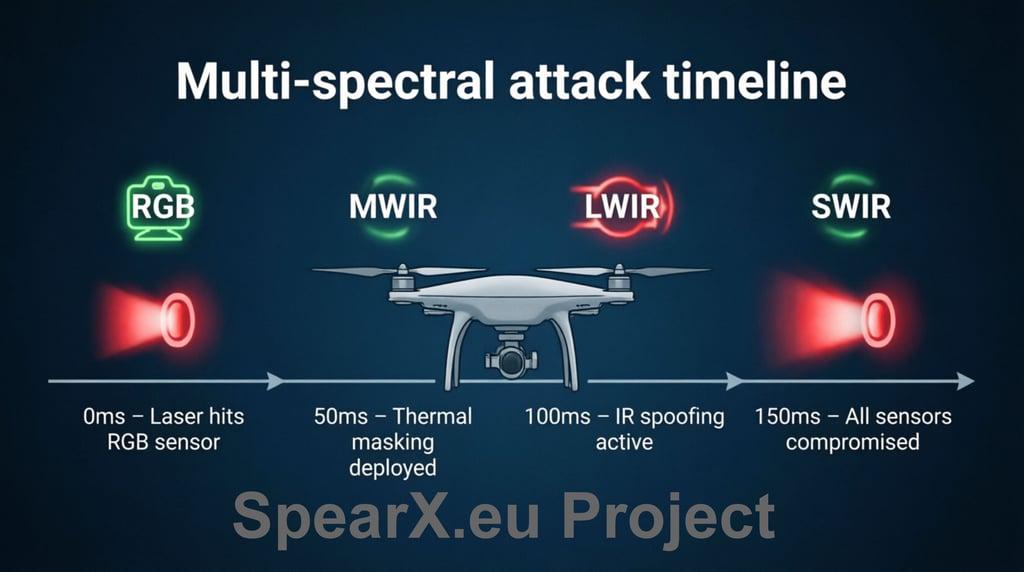
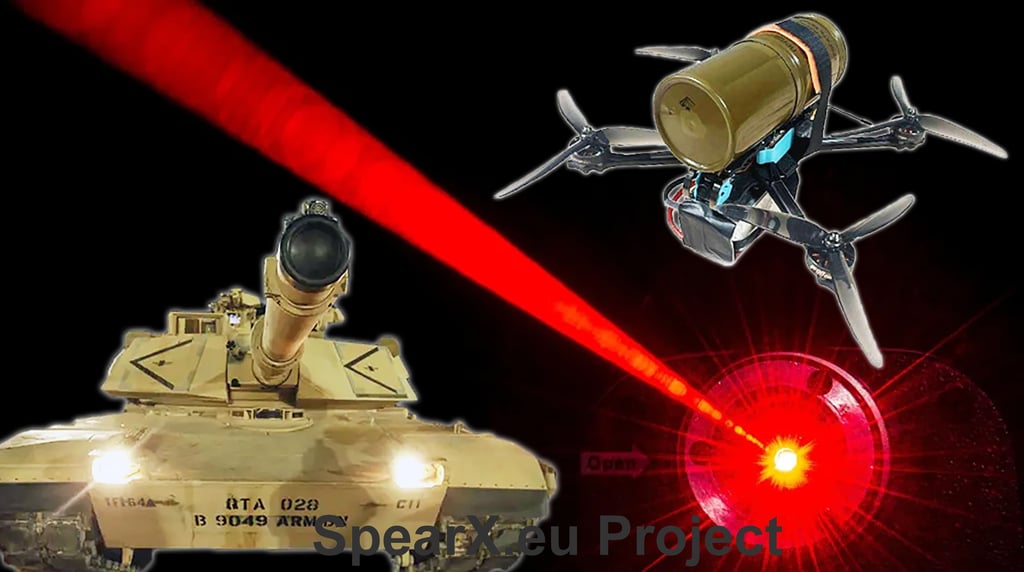
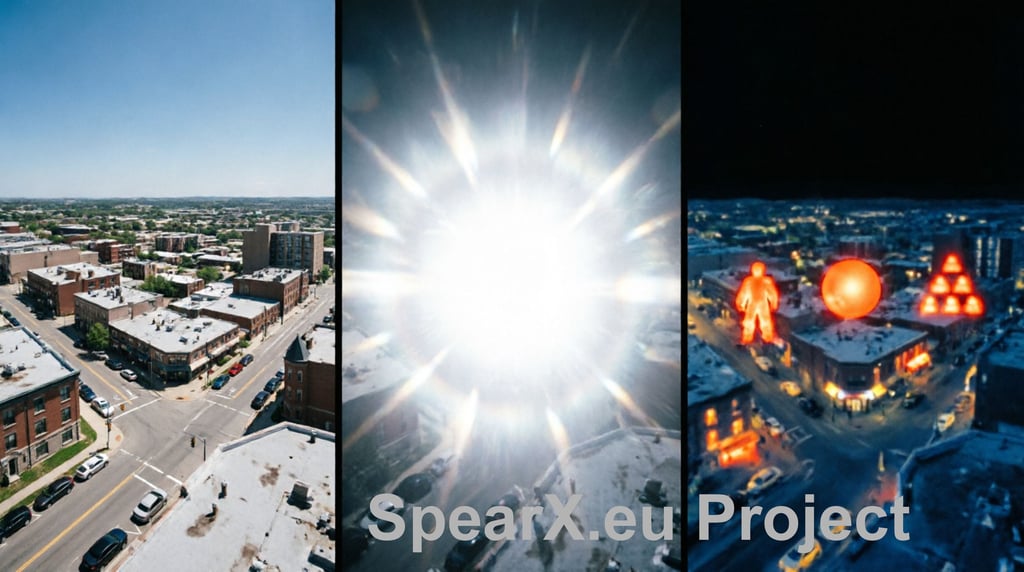
• Laser jamming (532 nm) = temporary camera blindness
• Bright lights = sensor overload, lost data
• Adversarial patches = tricking AI detectors
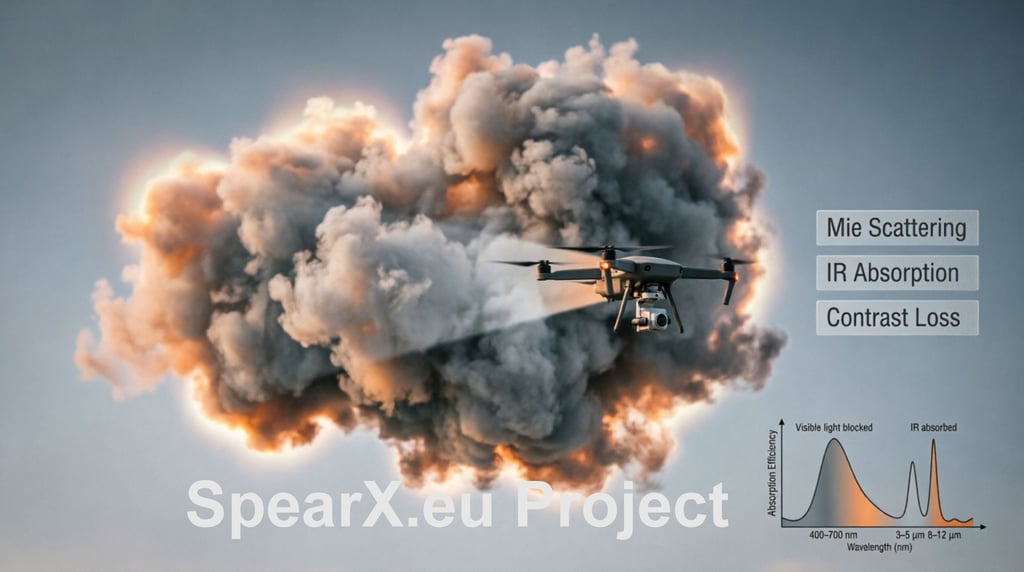
• Smoke/aerosols = killing image contrast
Fact: A 100-200 mW green laser can blind a camera at 200-300 m. Line of sight is the only requirement.
Thermal Cameras: MWIR (3-5 μm) & LWIR (8-14 μm)
"Thermal cannot be fooled"? Wrong!!!
How they attack:
LWIR attacks:
• Active IR spoofing = fake heat targets
• "Crossover" effect = object blends with background temperature
• IR aerosols = creating thermal fog
• Thermal Masking = materials hiding heat signatures
MWIR attacks:
• Laser jamming at 3-5 μm = sensor saturation
• Atmospheric absorption = water vapor and CO₂ reduce range
• Thermal masking = materials hiding heat signatures
Fact: MWIR/LWIR is weaker in hot conditions; Relying on one band = high risk.
SWIR attacks:
• Laser jamming at 1064 nm / 1550nm - InGaAs sensor saturation
• Atmospheric attenuation = water vapor absorption bands
• Selective camouflage = materials reflecting/absorbing specific SWIR bands
Fact: 1550 nm lasers require 5-10x more power than 1064 nm for effective jamming, but are safer for operators. Humidity above 70% can reduce SWIR range by 40-60%.
Why This Matters Now:
The market is full of solutions that work only in perfect lab conditions. If your drone depends on one sensor type, it can be neutralized cheaper than you think.
Key Insight:
Multi-spectral fusion (RGB + MWIR + LWIR + SWIR) is not magic, but it raises the bar.
To blind such a system, an attacker must:
Hit all channels at the same time
Sync the attack in time and space
Bypass cross-check algorithms
This is hard. But not impossible.
Next our post coming soon:
Practical protection methods. Which filters work. Which algorithms help. No marketing-just engineering.
Follow as on Linkedin so you don't miss it. If you own product security decisions, this is for you.
Related : GEOCOM Co. LLC www.geocomco.eu DeepTechRnD www.deeptechrnd.eu SpearXAgro www.spearxagro.eu
Contacts
SpearX ↑ Strike with Precision
+359 877 620 210
D-U-N-S® 525540791


© 2025 - 2026. All rights reserved. SpearX Projects. Geocom Co. LLC

SpearX is an EU-Ukrainian company located in a strategic areas for R&D in UAV