
C-UAS Architecture: Effective Detection Strategies
3/24/20261 min read
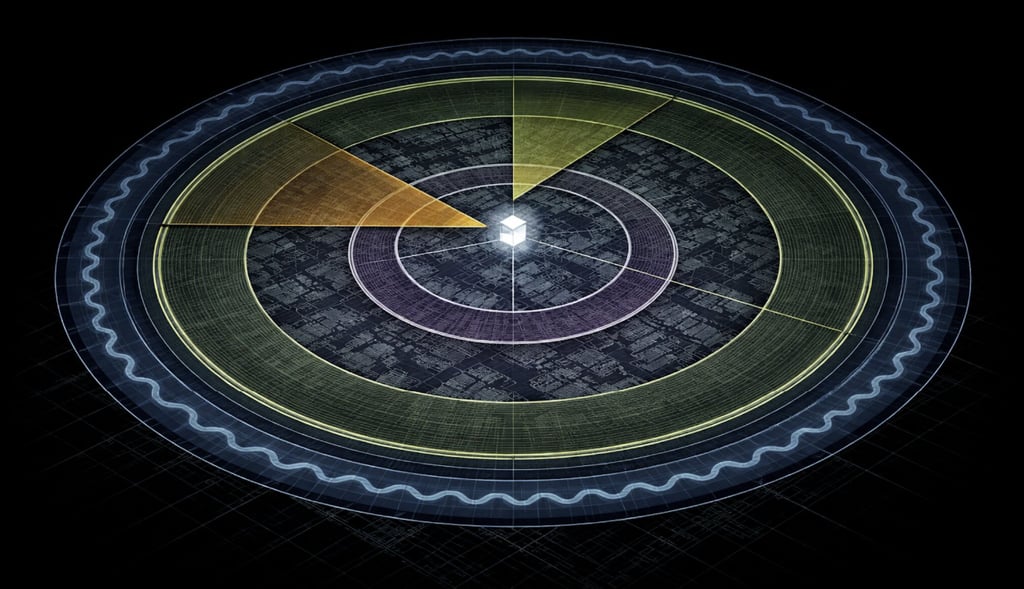
What works in the field.
Layer 1: RF Detection
How it works: Passive monitoring of RF control links.
Strengths:
• Long range (3-10 km)
• Low false alarms in cities
• Can identify drone model from signal
Limitations:
• Does not work against autonomous/fiber optic drones (no RF link)
• Needs database of known signatures
• Crowded spectrum in cities=noise
Field reality: RF is your first line-but never use it alone.
Layer 2: Radar
How it works: Active scanning for small, low-altitude objects.
Strengths:
• All-weather, day/night
• Range: 500m–5km (depends on RCS)
• Detects non-emitting (autonomous) drones
Limitations:
• High false positives (birds, debris)
• Expensive
• Needs clear line of sight
Field reality: Radar+RF=80%+detection. Radar alone=operator fatigue.
Layer 3: EO/IR
How it works: Visual and thermal confirmation of targets.
Strengths:
• Positive ID (drone vs. bird)
• Can record for analysis
• Works in darkness (IR)
Limitations:
• Short range (500m–2km)
• Weather-dependent (fog, rain, smoke)
• Needs precise gimbal control
Field reality: EO/IR is for confirmation-not primary detection.
Layer 4: Acoustic Sensors
How it works: Microphone arrays detect rotor sounds.
Strengths:
• Passive, low power, cheap
• Works in RF-denied environments
• Can classify by sound
Limitations:
• Very short range (200-500 m)
• Useless in wind/noise
• Slow response
Field reality: Niche use-perimeter defense for fixed sites.
Layer 5: ML Classification (The Brain)
How it works: Fuses all sensor data, classifies threat level.
Strengths:
• Reduces false positives by 60-80%
• Distinguishes FPV/commercial/military
• Learns from new signatures
Limitations:
• Needs field data (2K+ images minimum)
• Edge inference needs compute (EdgeAI)
• Model degrades in new environments
Field reality: This makes C-UAS intelligent-not just sensors.
Our Principle at SpearX: No single sensor is trustworthy. Fusion is mandatory.
Key Insight:
Detection is not finding every drone. It is finding the right drones, with high confidence, in time to act.
A system that "cries wolf" 10 times/day will be ignored on the 11th-when it matters.
Counter-Drone Systems: Detection & Classification Stack
Everyone talks about "shooting down drones".
In SpearX, we learned: the hard part is not mitigation-it is knowing what you look at, before it is too late.
A cUAS system is only as good as its detection architecture.
Related : GEOCOM Co. LLC www.geocomco.eu DeepTechRnD www.deeptechrnd.eu SpearXAgro www.spearxagro.eu
Contacts
SpearX ↑ Strike with Precision
+359 877 620 210
D-U-N-S® 525540791


© 2025 - 2026. All rights reserved. SpearX Projects. Geocom Co. LLC



SpearX is an EU-Ukrainian company located in a strategic areas for R&D in UAV